
On-Page SEO Checklist: 20 Tips to Rank Higher in Google
If you have ever wondered why some websites always show up on the page of Google and others don’t get seen the answer is usually because of good on-page SEO. Even the best content can be missed if it is not set up for search engines and for people who read it.
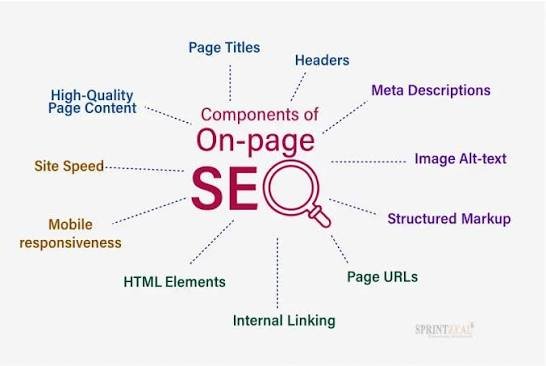
On-page SEO means all the changes you make directly on your website to help search engines figure out what your content is about and to make it better for visitors. Unlike off-page SEO, which’s about links from other sites on-page SEO is something you can control completely. On Page SEO checklist include Things like content, headings, keywords how the page is organized links inside the site and technical parts all matter here.
Googles search systems have gotten much better. Now they like websites that show they know a lot give information come up fast and offer a good experience. Just putting in keywords is not enough anymore. Good SEO means making content that answers what people are looking for and following the ways to do it.
No matter if you are a writer a small business person, a person who works with marketing or just starting with SEO learning on-page SEO can make your website show up more in search results. Better rankings usually mean visitors from search engines more people who want to interact with your content and more chances to get people to do something you want them to do.
In this guide we will go through a list of 20 on-page SEO tips that can help your website do better. Each tip is easy to understand. Can be used without knowing a lot of technical stuff. If you use these methods often you will make pages that’re good for search engines and also good for the people who visit them.
We will start with the important on-page SEO Checklist that help build a strong base for better Google rankings.
1. Do Good Keyword Research
Every good SEO plan starts with keyword research. Before you write anything find the words and phrases that your audience is looking for. Look for words that have a purpose and a good mix of how many people search for them and how hard it is to rank for them.
Don’t just go for the popular keywords. Also use long-tail keywords that answer questions. These often bring in visitors and are easier to rank for.
2. Use Your Main Keyword in the Right Places
Put your keyword in important parts like the title first part of the text, headings, the web address and the description that shows in search results.. Don’t put too many. Your writing should feel natural. Give real value to the people who read it.
3. Make a SEO
. A good title makes people click and helps search engines know what your page is about. Keep titles specific and around 50 to 60 characters.
4. Make a Meta Description
Even though meta descriptions do not help with rankings they do influence if people click on your link. Write a summary that has your main keyword and makes people want to visit your page.
5. Make an URL
Use short clear URLs that include your target keyword. Stay away, from numbers, symbols or long strings. A clean URL is easier for people and search engines to understand.
6. Use Proper Heading Structure
A page that is organized well is easier for readers and search engines to understand. Your page needs to have one **H1** tag, which’s the title then **H2** and **H3** headings to split your content into clear sections.
Do not skip heading levels. Use headings just for style. Instead use them to build a structure for your content. This makes it easier to read helps Google understand your page and lets users scan your content quickly.
7. Publish High-Quality, Original Content
Content is one of the important factors in SEO. Google gives rankings to websites that have helpful, correct and original information that really helps users solve a problem or answer a question.
Of taking information from other websites add your own thoughts, examples, numbers or step-by-step instructions. Content that covers a topic in depth is more likely to rank because it meets the needs of users better than short or repeated articles.
Always write for people first. Search engines second. If your content has value readers will stay longer share your article and come back for more.
8. Optimize Images for SEO
Images make the user experience better by making content more interesting. They should also be made for search engines.
Before you upload an image change the file name to something that describes the image of using names like “IMG1234.jpg.” Add clear **alt text** that tells what the image shows as this helps search engines understand the image and makes it easier for people using screen readers.
Reduce the size of image files to make the page load faster without losing quality. Faster pages offer an experience and can help your search performance.
9. Improve Internal Linking
Internal links connect one page on your website to another. They help visitors find content and let search engines crawl your website more easily and help visitors into spending more time looking at your content.
10. Include External Links to Trusted Sources
Linking to well-known websites can make your content stronger by backing up your statements with real information. References, to sources show readers that your content is carefully researched.
However only link to websites that’re relevant, correct and recent. Do not add many external links and make sure each one gives real value to the reader.
11. Improve Your Website Speed
Your website speed is very important for people who visit your site and for search engine rankings. People want your site to load fast in a few seconds. If your site is slow people will leave before they even read what you have to say. This makes more people leave your site without staying. That is not good.
To make your website speed better:
- You should make your images smaller before you put them on your site.
- You should make your CSS, JavaScript and HTML files smaller.
- You should let peoples browsers remember your site.
- You should choose a web hosting provider.
- You should use a Content Delivery Network if people visit your site from places.
You can use tools like Google Page Speed Insights or Lighthouse to see how well your site is doing. Even small improvements can make people happier with your site.
12. Make Your Website Work Well On Mobile Devices
Most people use their devices to search on Google. So Google looks at the version of your site when it decides how to rank you.
Your website should work well on devices. It should:
- Look good on all screen sizes.
- Have text that’s easy to read without zooming in.
- Have buttons and menus that’re easy to use.
- Not have pop-ups that get in the way of your content.
- Load fast on networks.
If you use web design your site will work well on all devices and that will make your visitors happy.
13. Use Your Keywords In The Right Places
You should use your keyword in important places on your site so search engines know what your page is about.. You should use your keywords in a natural way.
Good places to use your keyword are:
- The title of your page
- The first 100 words of your page
- At least one of your headings
- The title of your page that people see in search results
- The description of your page that people see in search results
- The address of your page
- The description of your images
You should also use keywords that are related to your main keyword throughout your page. This helps search engines understand what your page is about without you having to repeat your keyword too much.
14. Make Your Site Easy To Use
Google wants to rank sites that’re easy to use and make people happy. You should make your site easy to navigate use fonts that’re easy to read and organize your content in a logical way.
You should break up paragraphs into smaller ones use bullet points when it makes sense and leave some empty space to make your page easy to scan. You should also add images, charts or infographics to make your content more interesting and easier to understand.
If people are happy with your site they will stay longer share your content or do what you want them to do on your site.
15. Keep Your Content Up To Date
Search engine optimization is not something you do once and forget about. You should always be looking at your content. Updating it to make sure it is still good.
You should update statistics fix broken links add new examples and add more detail to parts of your page that need it. If you update your content search engines will know that your page is still relevant and valuable.
If you keep your content up, to date you can keep your rankings make your content more accurate and keep your visitors coming for more information.
16. Optimize for Featured Snippets
Featured snippets are the answer boxes that show up at the top of Google search results. Getting a featured snippet can really help your website stand out and get more people to click on it.
To get a featured snippet you should:
- Answer questions in an simple way.
- Use Bullet points when it makes sense.
- Add headings that describe what your content is about.
- Define terms in one or two sentences before explaining them in more detail.
When you structure your content like this it is easier for Google to find and show the important information.
17. Use Schema Markup
Schema markup is a way to help search engines understand your content better. It is not a way to improve your ranking but it can make your search results look more attractive and get more people to click on them.
For blog posts some useful types of schema markup include:
- Article
- FAQ
- How-To
- Breadcrumb
People are likely to click on your search results when they look attractive . schema.org is a good website for it
18. Reduce Bounce Rate with Engaging Content
When people visit your website and then leave without doing anything that is called a bounce. While bounce rate is not a way to improve your ranking making your content more engaging can keep people on your website longer and get them to look at more pages.
You can keep people engaged by:
- Writing introductions that grab their attention.
- Using paragraphs and making your content easy to read.
- Adding pictures and videos that’re relevant.
- Linking to articles that might be interesting.
- Giving people a reason to keep reading at the end of each section.
When people stay on your website longer it makes for an experience.
19. Add a Call-to-Action
Every blog post should tell people what to do. Whether you want people to sign up for your newsletter read another article leave a comment or contact your business, a clear call-to-action can get people more involved.
Some examples of calls-to-action include:
- Sign up for more tips on search engine optimization.
- Download our checklist for search engine optimization.
- Read our guide for beginners on search engine optimization.
- Contact us for a consultation on search engine optimization.
A good call-to-action keeps people connected to your website.
20. Monitor and Improve Your Search Engine Optimization Performance
Just publishing your content is not enough. You should regularly check how your pages are doing and look for ways to make them better.
You should track things like:
- How many people are visiting your website from search engines.
- How well your website is ranking for keywords.
- How often people click on your search results.
- How long people stay on your website.
- How many people bounce off your website.
- How many pages are indexed.
Tools like Google Search Console and Google Analytics can help you understand what is working and what needs to be improved. Search engine optimization is a process and making small changes over time can lead to big results.
Final Thoughts
Optimizing your website for search engines is one of the ways to get more people to visit your website. By following these tips you can make your content more appealing to search engines and your audience.
Remember that search engine optimization takes time. If you keep making high-quality content optimizing each page and checking your results you can build authority. Get more people to visit your website over time.
Focus on making content that answers peoples questions and follows proven optimization techniques. As search engines get better websites that prioritize quality, relevance and user experience will always have the chance of ranking higher.
Frequently Asked Questions
1. What is on-page search engine optimization?
On-page SEO is the process of making your website better by optimizing your content, headings, keywords, images and meta tags.
2. Why is on-page search engine optimization important?
It helps search engines understand your content makes your website more user-friendly gets you visitors and can improve your ranking.
3. How often should I update my search engine optimization content?
You should review your pages every 6-12 months or sooner if there are big changes in the algorithm, new trends or outdated information.
4. Is using many keywords good for search engine optimization?
No using too many keywords makes your content hard to read and can hurt your ranking. You should use keywords in a way and focus on providing value.
5. Which is important: on-page search engine optimization or off-page search engine optimization?
Both are important. On-page search engine optimization is the foundation. Without optimized pages even strong backlinks may not produce the best results.
A optimized page has valuable content uses keywords thoughtfully loads fast is easy to use on mobile devices and provides a good user experience. You should use this checklist as part of your routine, not just a one-time task. By following these, on-page search engine optimization tips you can improve your chances of ranking in Google and getting more visitors to your website.