Future of Digital Marketing

In this guide we will cover the top digital marketing trends 2026. If you want to know the latest digital marketing trends for 2026, you are in the right place. Digital marketing trends 2026 is changing faster than ever, and businesses need to keep up with the latest strategies to stay competitive. In 2026, technologies like artificial intelligence (AI), voice search, short-form videos, and personalized marketing are transforming how brands connect with customers. Understanding these changes can help businesses improve their online presence, attract more customers, and increase sales. In this article, we’ll explore the Top Digital Marketing Trends 2026, explain why they matter, and share practical tips to help you stay ahead in the digital world.

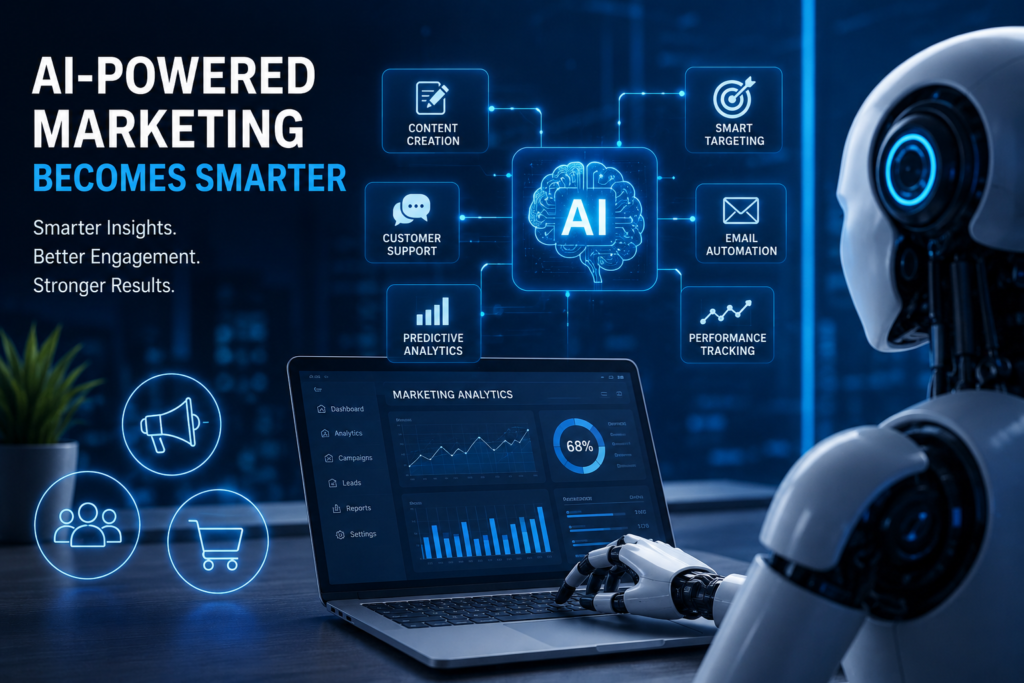
AI-Powered Marketing Becomes Smarter
Digital Marketing trends 2026

Artificial Intelligence (AI) is one of the biggest digital marketing trends 2026. It helps businesses understand customer behavior, create better content, and improve marketing results with less time and effort. AI tools are making marketing faster, smarter, and more effective for businesses of all sizes.

AI Tools for Better Marketing

AI-powered tools can help marketers write blog posts, create social media captions, generate images, analyze data, and plan marketing campaigns. Digital marketing trends 2026 These tools save time and allow businesses to focus on strategy and customer relationships.

Personalized Content

Today’s customers expect content that matches their interests. AI analyzes customer data, such as browsing history and purchase behavior, to recommend products, send personalized emails, and display relevant advertisements. This improves the user experience and increases engagement.

Marketing Automation

AI makes it easy to automate repetitive marketing tasks. Businesses can schedule social media posts, send follow-up emails, respond to customer questions with chatbots, and track campaign performance automatically. This saves time while ensuring consistent communication with customers.

Benefits for Businesses

Using AI in digital marketing offers several advantages:

Customer Support

AI-powered chatbots and virtual assistants provide instant customer support 24/7. They can answer common questions, solve basic issues, recommend products, and guide customers through the buying process. This improves customer satisfaction, reduces response times, and allows human support teams to focus on more complex inquiries. As a result, businesses can offer faster, more efficient, and cost-effective customer service.

Content Creation

Content creation is becoming faster and smarter with the help of Artificial Intelligence (AI). In 2026, marketers use AI tools to generate blog posts, social media captions, email campaigns, product descriptions, and video scripts in just a few minutes. These tools help save time, improve productivity, and maintain a consistent brand voice across different platforms.

However, AI works best when combined with human creativity. While AI can generate ideas and drafts, marketers should review and personalize the content to ensure it is accurate, engaging, and aligned with their audience’s needs. High-quality, original content remains essential for building trust, improving SEO rankings, and increasing customer engagement. Businesses that use AI wisely can create more valuable content while staying competitive in the digital marketing landscape.

Voice Search Optimization

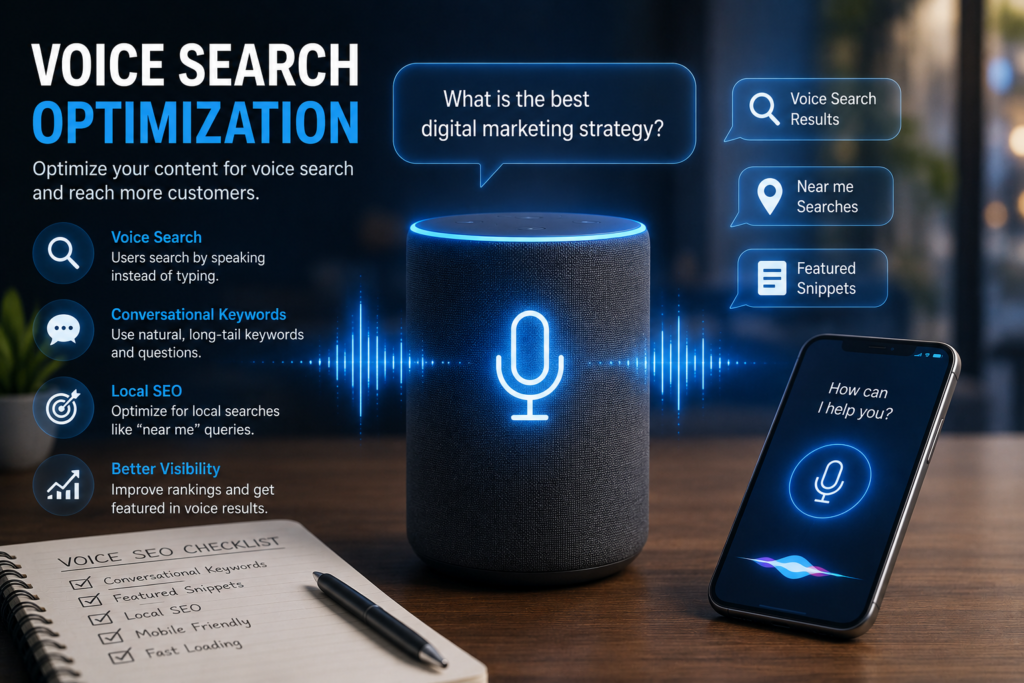
Voice search optimization is one of the most important digital marketing trends in 2026. With the growing use of smartphones, smart speakers, and AI voice assistants like Google Assistant, Siri, and Alexa, more people are searching the internet using their voice instead of typing. Voice searches are usually longer and more conversational, which means businesses need to optimize their content for natural language and question-based keywords.

To succeed in voice search, marketers should focus on creating clear, informative, and easy-to-read content. Using long-tail keywords, answering common customer questions, and optimizing for local SEO can improve the chances of appearing in voice search results. Websites that load quickly, are mobile-friendly, and provide accurate information are more likely to rank well. digital marketing trends 2026 By adopting voice search optimization, businesses can reach a wider audience, improve user experience, and stay ahead in the competitive digital marketing landscape

Short-Form Video Content
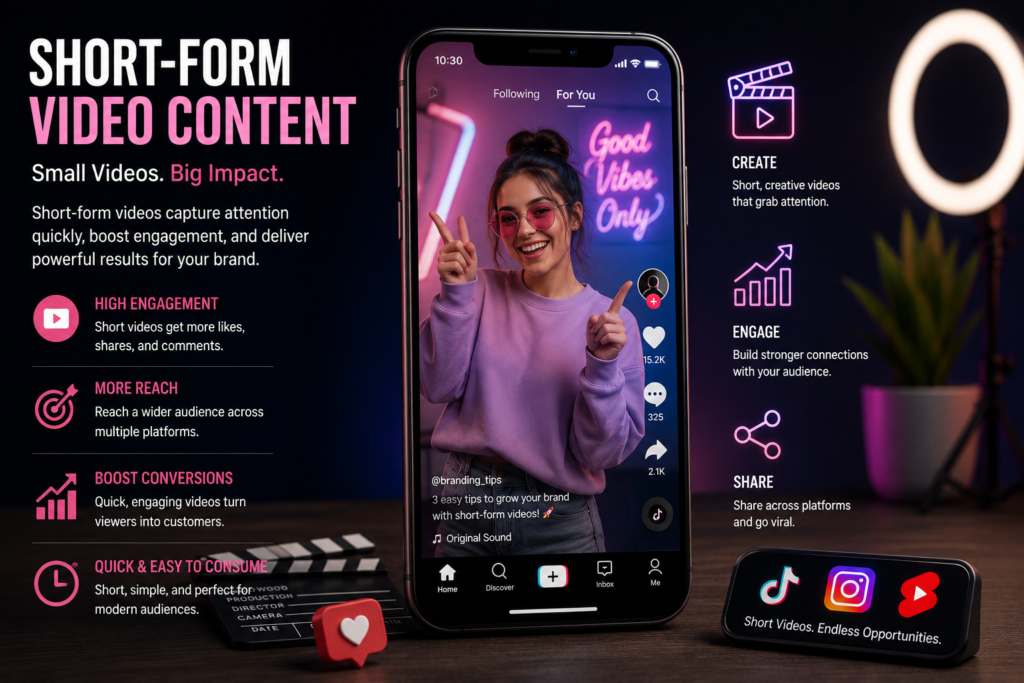
Short-form video content continues to dominate digital marketing in 2026. Platforms like TikTok, Instagram Reels, and YouTube Shorts have changed the way people consume content. These videos are usually 15 to 60 seconds long, making them easy to watch, share, and engage with. Businesses use short videos to showcase products, share tips, tell stories, and connect with their audience in a creative way.

One of the biggest advantages of short-form videos is their high engagement rate. Eye-catching visuals, trending music, and quick storytelling encourage users to like, comment, and share the content. This helps brands reach a larger audience without spending a huge advertising budget. Consistently posting valuable and entertaining videos also improves brand awareness, builds customer trust, and increases website traffic and sales. In 2026, short-form video marketing is no longer optional—it is an essential strategy for businesses that want to grow online.

Digital Marketing trends 2026 (Personalized Marketing)
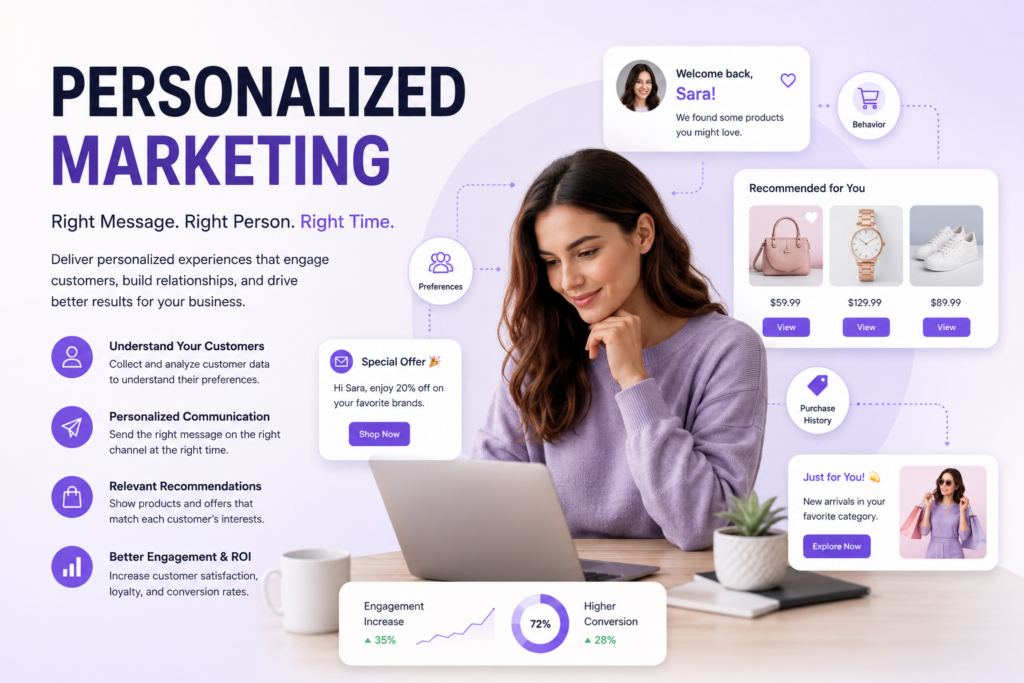
Personalized marketing is one of the most effective digital marketing trends in 2026. Instead of showing the same content to everyone, businesses use customer data to deliver personalized experiences based on individual interests, browsing history, purchase behavior, and preferences. This helps brands build stronger relationships with their audience and improve customer satisfaction.

Customer Data

Customer data is the foundation of personalized marketing. Businesses collect information such as age, location, interests, website activity, and previous purchases to better understand their customers. By analyzing this data, marketers can create targeted campaigns that are more relevant and effective. Using customer data responsibly and respecting privacy regulations also helps build trust and long-term customer loyalty.

Personalized Emails

Personalized email marketing allows businesses to send relevant messages to each customer. Instead of generic emails, companies can include the customer’s name, recommend products based on previous purchases, or send special offers for birthdays and holidays. Personalized emails often achieve higher open rates, click-through rates, and conversions because they provide content that matches the recipient’s interests.

Product Recommendations

Product recommendations help customers discover items they are most likely to buy. E-commerce websites use AI and customer behavior to suggest products based on browsing history, previous purchases, and similar customer preferences. These personalized suggestions improve the shopping experience, increase average order value, and encourage repeat purchases.

Better User Experience

Personalized marketing creates a better user experience by showing customers content, products, and offers that are relevant to their needs. Visitors can quickly find what they are looking for without searching through unnecessary information. A smooth, personalized experience increases customer satisfaction, strengthens brand loyalty, and helps businesses achieve higher engagement and sales in 2026.

Influencer Marketing Evolution
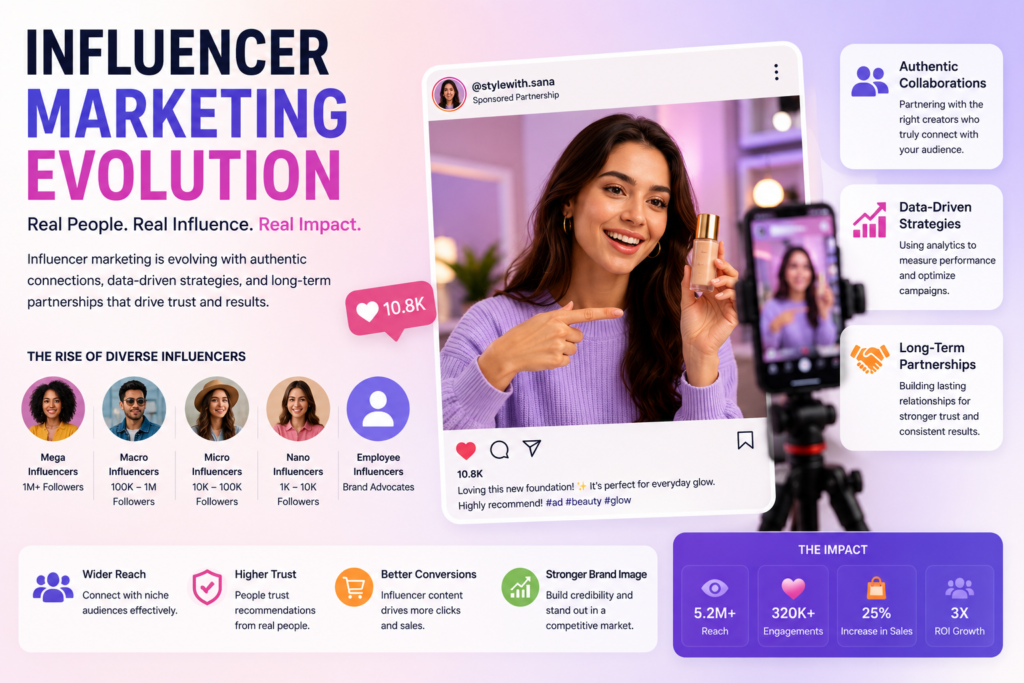
Influencer marketing continues to evolve in 2026 as brands focus more on authenticity than follower count. Instead of partnering only with celebrities, businesses are now working with nano and micro influencers who have smaller but highly engaged audiences. These influencers often build stronger relationships with their followers, making their recommendations more trustworthy and effective.

Nano Influencers

Nano influencers typically have between 1,000 and 10,000 followers. Although their audience is smaller, they usually have high engagement and a close connection with their followers. Their content feels more personal and genuine, making them an excellent choice for local businesses and niche brands looking to build trust.

Micro Influencers

Micro influencers usually have between 10,000 and 100,000 followers. They are considered experts in specific topics such as fashion, beauty, fitness, or technology. Brands collaborate with micro influencers to reach targeted audiences, increase brand awareness, and generate higher engagement at a lower cost than celebrity endorsements.

Authentic Collaborations

In 2026, successful influencer marketing is built on authentic collaborations. Instead of promoting products through scripted advertisements, influencers create honest reviews, tutorials, and real-life experiences. This natural approach helps audiences relate to the content and increases the effectiveness of marketing campaigns.

Higher Trust

Consumers trust recommendations from real people more than traditional advertisements. When influencers genuinely use and recommend a product, their followers are more likely to believe the review and make a purchase. By choosing influencers who align with their brand values, businesses can build credibility, strengthen customer relationships, and achieve better marketing results.
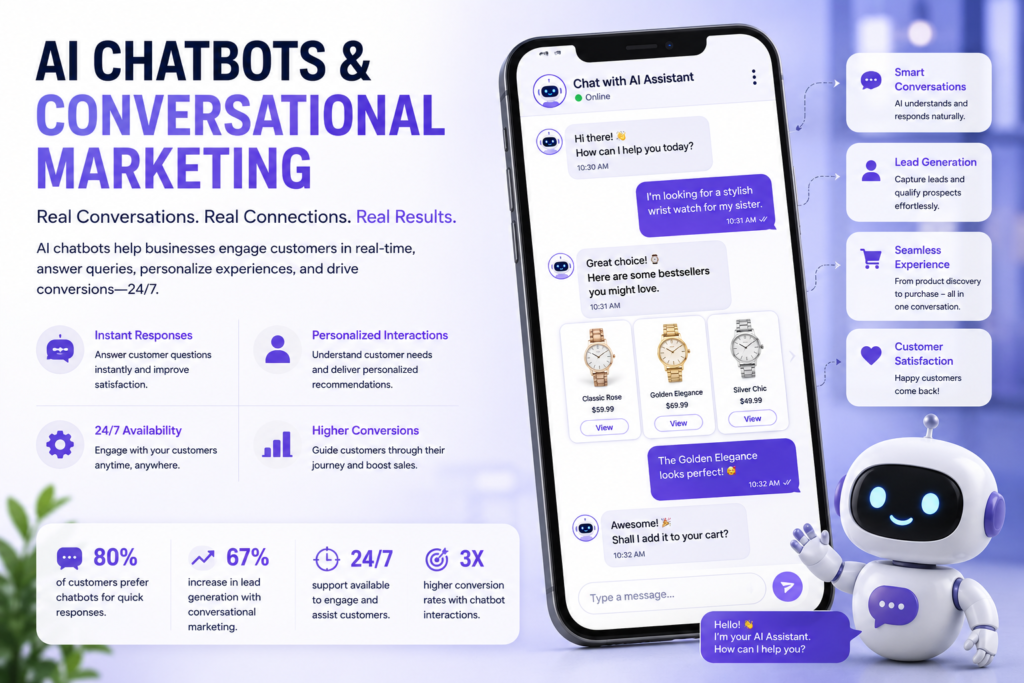
AI Chatbots & Conversational Marketing

AI chatbots and conversational marketing are transforming the way businesses interact with customers in 2026. Modern AI chatbots can answer questions, recommend products, schedule appointments, and assist with purchases in real time. They help businesses provide fast, reliable support while reducing the workload for customer service teams. By offering instant communication, chatbots improve customer satisfaction and increase the chances of converting visitors into loyal customers.

24/7 Customer Support

One of the biggest advantages of AI chatbots is their ability to provide customer support around the clock. Unlike human agents, chatbots are available 24/7 to answer frequently asked questions, solve simple problems, and guide customers through the buying process. This ensures that customers receive help whenever they need it, regardless of time zones or business hours.

Instant Responses

Customers expect quick answers when they visit a website or contact a business online. AI chatbots respond within seconds, eliminating long waiting times. Fast responses improve the user experience, keep visitors engaged, and reduce the chances of potential customers leaving the website before making a purchase.

Lead Generation

AI chatbots are powerful tools for generating and qualifying leads. They can ask visitors relevant questions, collect contact information, recommend suitable products or services, and direct qualified leads to the sales team. This automated process helps businesses capture more leads while saving time and improving overall marketing efficiency.

Improved Customer Experience

Conversational marketing creates a more personalized and engaging customer experience. AI chatbots can remember customer preferences, provide tailored recommendations, and offer assistance throughout the customer journey. By delivering fast, accurate, and personalized support, businesses can build trust, increase customer satisfaction, and encourage long-term loyalty. In 2026, AI chatbots have become an essential part of every successful digital marketing strategy.

Social Commerce

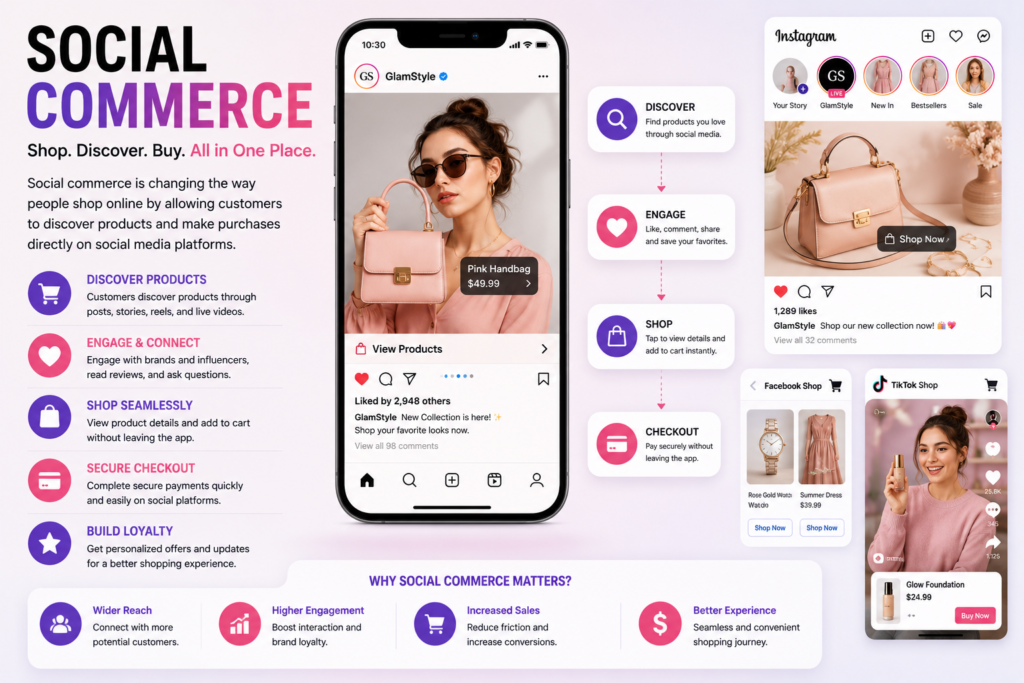
Social commerce is one of the fastest-growing digital marketing trends in 2026. It allows customers to discover, explore, and purchase products directly through social media platforms without leaving the app. This seamless shopping experience makes online buying faster and more convenient. As more consumers spend time on social media every day, businesses are using these platforms not only for promotion but also as complete online stores.

Shopping Directly from Social Media

Modern consumers prefer quick and hassle-free shopping experiences. Social commerce enables users to view product details, read customer reviews, and complete purchases directly within their favorite social media apps. This reduces the number of steps in the buying process, increases customer convenience, and helps businesses improve conversion rates.

Instagram Shop

Instagram Shop has become a powerful platform for online businesses. Brands can create digital storefronts, tag products in posts, Stories, and Reels, and allow customers to shop with just a few taps. High-quality product images, engaging videos, and influencer collaborations help businesses attract more customers and increase sales through Instagram.

Facebook Shop

Facebook Shop provides businesses with an easy way to showcase their products to millions of users. Companies can organize products into collections, interact with customers through Messenger, and promote items using targeted advertisements. This integrated shopping experience helps businesses reach new audiences while making online shopping more convenient for customers.

TikTok Shop

TikTok Shop continues to grow rapidly in 2026, driven by short-form videos and live shopping events. Businesses and creators can demonstrate products through entertaining videos, live streams, and influencer partnerships, allowing viewers to purchase items instantly. The platform’s powerful recommendation algorithm helps products reach interested buyers, making TikTok Shop an effective channel for increasing brand awareness, customer engagement, and online sales.

Zero-Click Search & Featured Snippets

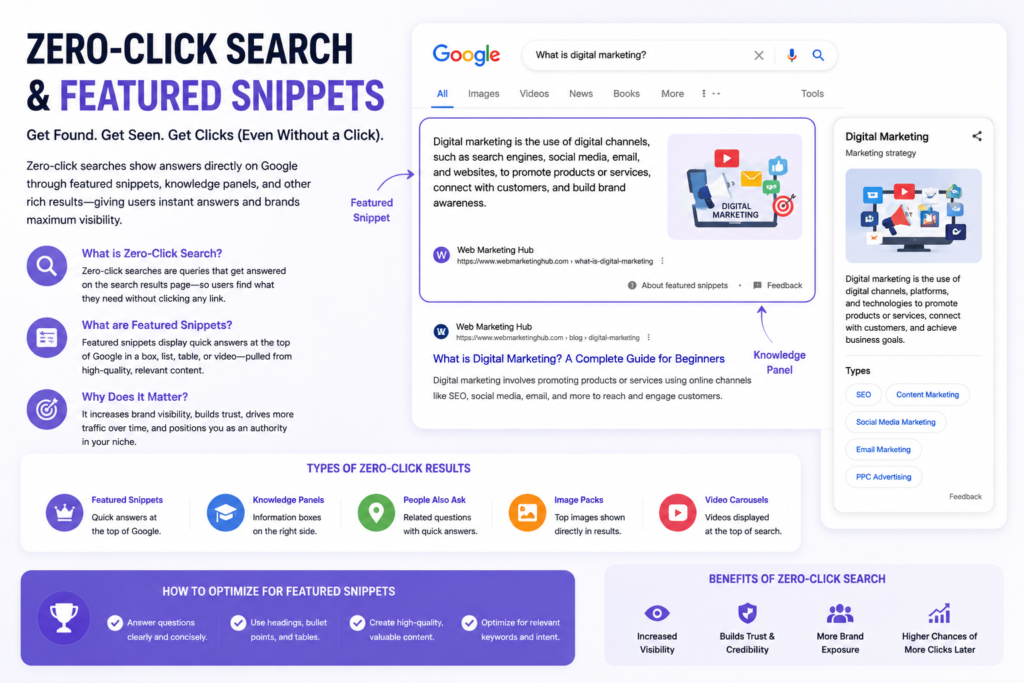
Zero-click searches are changing the way people find information online in 2026. A zero-click search happens when users get the answer directly on Google’s search results page without clicking on any website. Google displays information through featured snippets, knowledge panels, AI overviews, and other rich search results. To stay competitive, businesses must optimize their content so it appears in these prominent positions and gains more visibility.

What Are Zero-Click Searches?

A zero-click search occurs when Google provides the answer immediately on the search results page. Users can find definitions, weather updates, business hours, calculations, or quick answers without visiting another website. Although these searches may reduce website clicks, they can increase brand visibility and establish your business as a trusted source of information.

Google Featured Snippets

Featured snippets are highlighted information boxes that appear at the top of Google’s search results. They provide direct answers to user questions in the form of paragraphs, lists, tables, or videos. Websites that earn featured snippets often receive greater visibility, build credibility, and attract more qualified traffic. Creating clear, well-structured, and informative content increases the chances of appearing in these valuable search positions.

SEO Strategy

To improve your chances of ranking in zero-click search results, focus on creating high-quality, question-based content that directly answers users’ queries. Use clear headings, bullet points, numbered lists, and concise paragraphs to make your content easy for search engines to understand. Optimizing for long-tail keywords, improving page speed, using structured data (schema markup), and maintaining a mobile-friendly website can further increase your visibility.digital maeketing trends 2026  In 2026, businesses that adapt their SEO strategies for zero-click searches and featured snippets will have a stronger online presence and gain a competitive advantage.

Privacy-First Marketing

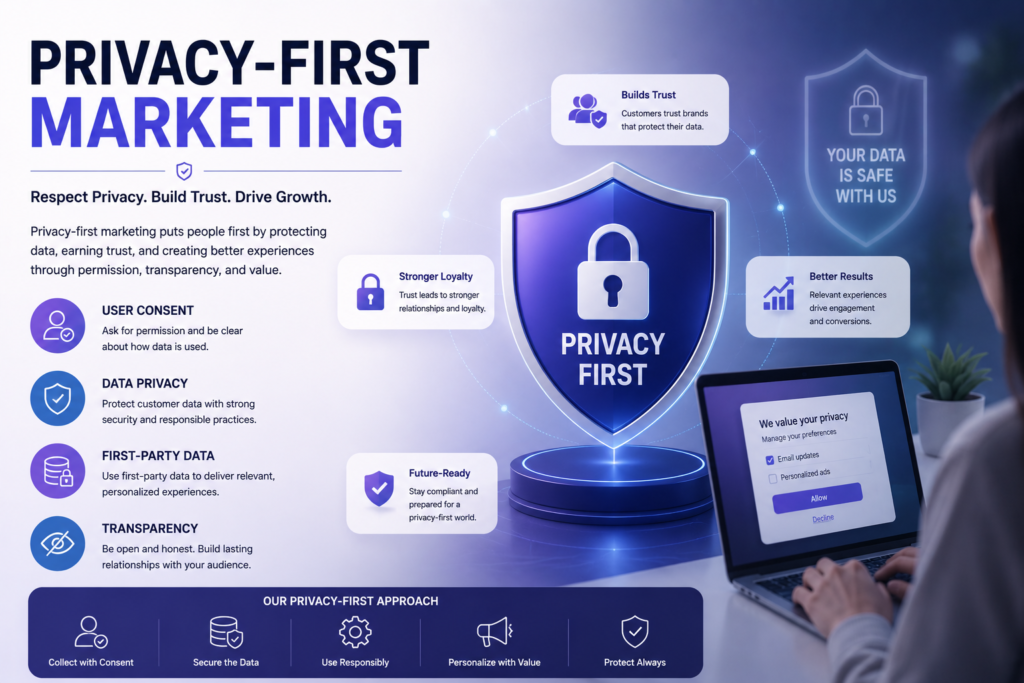
Privacy-first marketing has become a major focus in digital marketing trends 2026. As customers become more concerned about how their personal information is collected and used, businesses must adopt transparent and ethical marketing practices. Governments have introduced stricter privacy regulations, and major web browsers are limiting the use of third-party cookies. As a result, companies are shifting toward privacy-friendly strategies that build trust while still delivering personalized experiences.

Third-Party Cookies Removal

Many web browsers are gradually removing support for third-party cookies to protect user privacy. Since these cookies were widely used for tracking users across different websites, marketers must now find new ways to understand customer behavior. Businesses are investing in alternative tracking methods and focusing on collecting data directly from their own websites and customers.

First-Party Data

First-party data is information that businesses collect directly from their customers through websites, mobile apps, email subscriptions, surveys, and purchase history. This data is more accurate, reliable, and privacy-friendly because customers willingly share it. By using first-party data, businesses can create personalized marketing campaigns while maintaining customer trust.

User Privacy

Protecting user privacy is essential for building strong customer relationships. Businesses should clearly explain what data they collect, why they collect it, and how it will be used.Digital marketing trends 2026  Providing secure systems to protect customer information and following privacy regulations helps increase customer confidence and strengthens a brand’s reputation.

Consent-Based Marketing

Consent-based marketing means asking users for permission before collecting or using their personal data. Customers should have the option to accept, reject, or manage their privacy preferences. This transparent approach not only ensures compliance with privacy laws but also builds long-term trust and loyalty. In 2026, businesses that prioritize customer privacy and ethical data practices will have a significant competitive advantage in the digital marketplace.

AR & VR Marketing

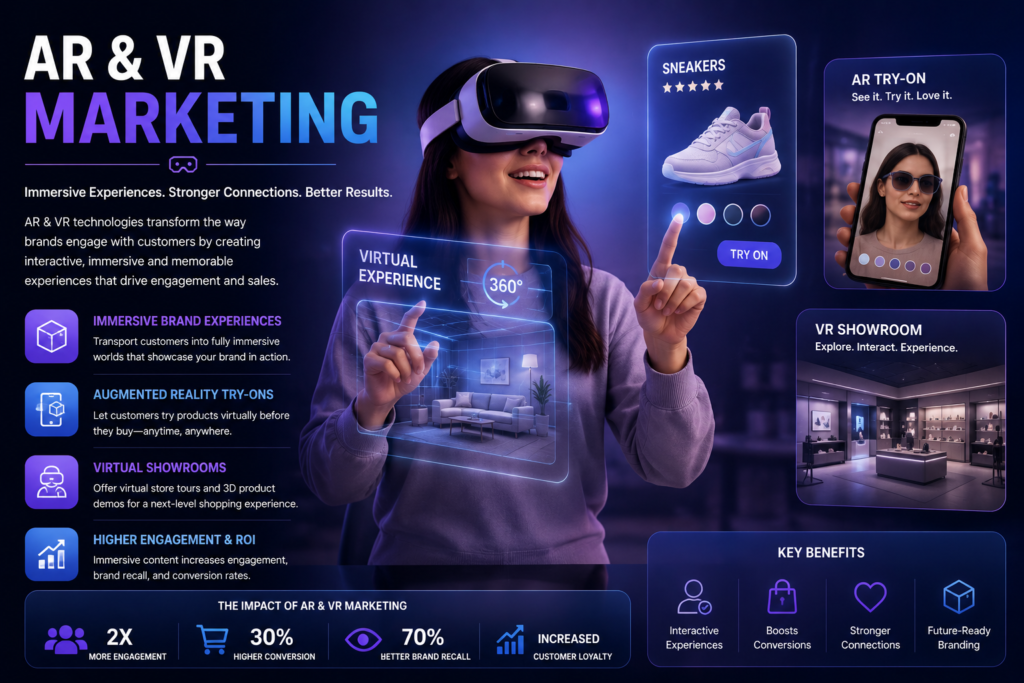
Augmented Reality (AR) and Virtual Reality (VR) are transforming digital marketing in 2026 by creating interactive and engaging customer experiences. These technologies allow customers to explore products in a virtual environment before making a purchase. From trying on accessories to viewing furniture in a room, AR and VR help shoppers make more informed buying decisions. As technology becomes more affordable and accessible, businesses are using it to improve customer engagement, increase confidence, and boost sales.

Virtual Product Try-Ons

Virtual product try-ons allow customers to see how a product looks before buying it. Using a smartphone or AR-enabled device, shoppers can try on glasses, jewelry, watches, clothing, or makeup without visiting a physical store. This feature reduces uncertainty, improves customer confidence, and lowers product return rates, making online shopping more convenient and enjoyable.

Interactive Shopping

Interactive shopping gives customers a more engaging way to explore products online. Instead of viewing static images, shoppers can rotate products in 360 degrees, zoom in on details, change colors or styles, and interact with products in real time. These features help customers better understand the product, leading to higher engagement and increased purchase decisions.

Immersive Customer Experience

AR and VR create immersive experiences that make customers feel connected to a brand. Businesses can offer virtual showrooms, interactive product demonstrations, and virtual store tours that allow customers to explore products from anywhere. These experiences make online shopping more exciting, improve customer satisfaction, and strengthen brand loyalty.https://hubspot.com In 2026, AR and VR marketing are becoming essential tools for businesses that want to stand out in the competitive digital marketplace.

Sustainable & Ethical Marketing

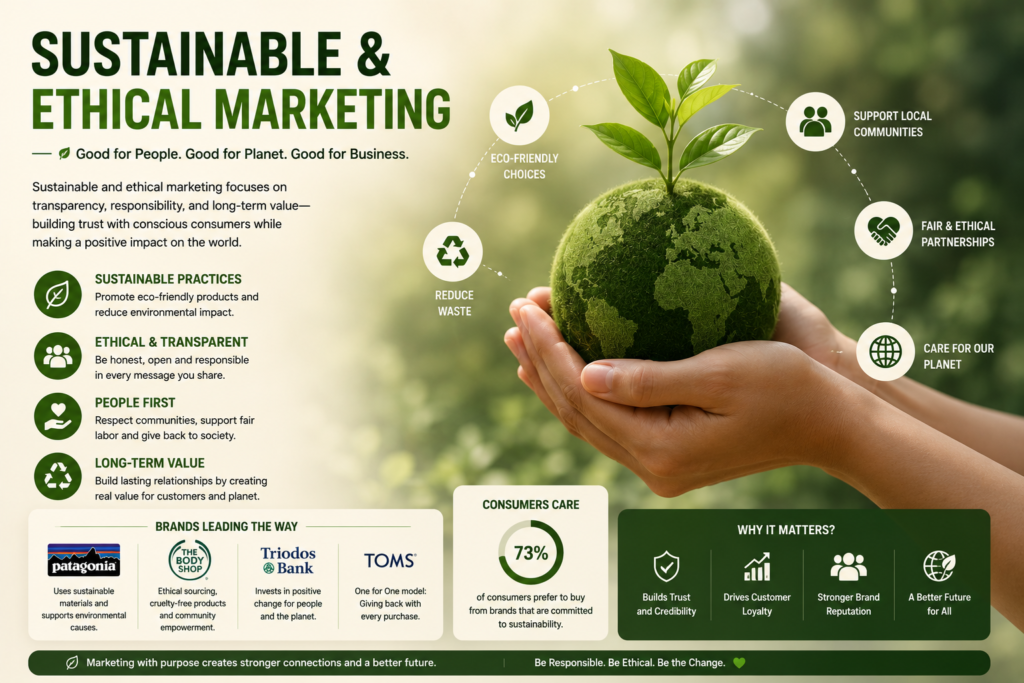
Sustainable and ethical marketing is becoming one of the most important digital marketing trends in 2026. Modern consumers prefer brands that care about the environment, treat customers honestly, and operate responsibly. Businesses are no longer judged only by the quality of their products but also by their values and social impact. By adopting sustainable and ethical marketing practices, companies can build stronger relationships with customers, improve their reputation, and achieve long-term business growth.

Eco-Friendly Branding

Eco-friendly branding focuses on reducing environmental impact while promoting sustainable products and services. Businesses are using recyclable packaging, reducing plastic waste, supporting green initiatives, and choosing environmentally friendly production methods. These efforts appeal to environmentally conscious consumers and help brands stand out in a competitive market.

Transparency

Transparency means being honest and open with customers about products, pricing, sourcing, and business practices. Brands should provide accurate information, avoid misleading advertisements, and clearly communicate their values. Honest communication builds credibility and helps customers make informed purchasing decisions.

Consumer Trust

Trust is one of the most valuable assets for any business. Customers are more likely to buy from brands that consistently deliver quality products, protect customer data, and fulfill their promises. Businesses that respond to customer feedback, maintain ethical practices, and provide excellent customer service can strengthen consumer trust and encourage positive word-of-mouth marketing.

Long-Term Loyalty

Ethical marketing helps businesses build long-term customer loyalty. When customers feel that a brand shares their values and treats them fairly, they are more likely to make repeat purchases and recommend the brand to others. Loyal customers not only increase sales but also become brand advocates who help attract new customers. In 2026, businesses that prioritize sustainability, honesty, and customer trust will be better positioned for long-term success in the digital marketplace.

Conclusion

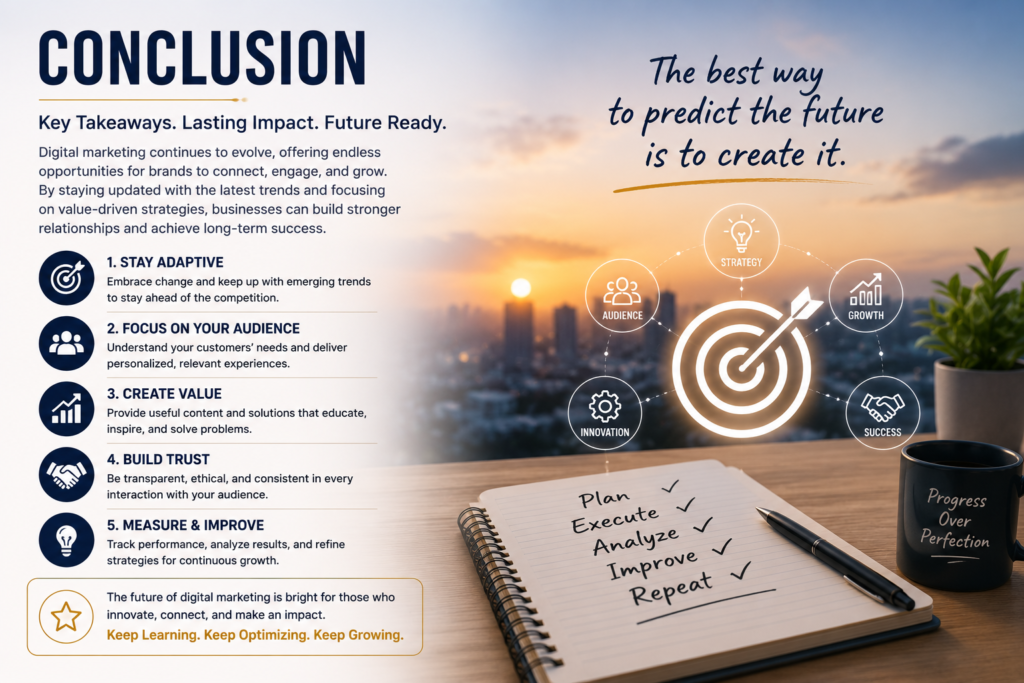
Digital marketing continues to evolve rapidly, and businesses must stay updated with the latest trends to remain competitive in 2026. From AI-powered marketing and voice search optimization to short-form videos, social commerce, and AR/VR experiences, each trend offers new opportunities to connect with customers and grow online. At the same time, privacy-first marketing and ethical business practices are becoming essential for building trust and long-term customer relationships.

Businesses that embrace these digital marketing trends can improve customer engagement, increase brand awareness, generate more leads, and boost sales. The key to success is combining innovative technology with high-quality content and a customer-focused strategy. By adapting to these changes and continuously improving their marketing efforts, businesses can stay ahead of the competition and achieve sustainable growth in the ever-changing digital landscape.

FAQ Section

Q1. What is the biggest digital marketing trend in 2026?

Artificial Intelligence (AI) is the biggest digital marketing trend in 2026. Businesses use AI for content creation, customer support, data analysis, marketing automation, and personalized campaigns. Top digital marketing trends 2026  AI helps marketers work more efficiently while improving customer experiences and increasing conversions.

Q2. Is AI replacing digital marketers?

No, AI is not replacing digital marketers. Instead, it is helping them perform tasks faster and more effectively. While AI can automate repetitive work and generate content, human creativity, strategic thinking, and decision-making are still essential for successful marketing campaigns.

Q3. Why is short-form video important in 2026?

Short-form videos capture attention quickly and generate higher engagement than many other content formats. Platforms like TikTok, Instagram Reels, and YouTube Shorts help businesses increase brand awareness, reach new audiences, and promote products through creative and entertaining content.

Q4. What is social commerce?

Social commerce is the process of buying and selling products directly through social media platforms such as Instagram, Facebook, and TikTok. It allows customers to discover products, view details, and complete purchases without leaving the app, making the shopping experience faster and more convenient.

Q5. How can businesses prepare for digital marketing in 2026?

Businesses can prepare by adopting AI-powered tools, creating high-quality content, optimizing for voice search and SEO, investing in short-form videos, using first-party customer data, improving website performance, and focusing on customer privacy. latest digital marketing trends in 2026 Staying updated with new technologies and consumer behavior will help businesses remain competitive and achieve long-term growth.

Leave a Reply

Your email address will not be published. Required fields are marked *