Top 10 digital marketing trends 2026
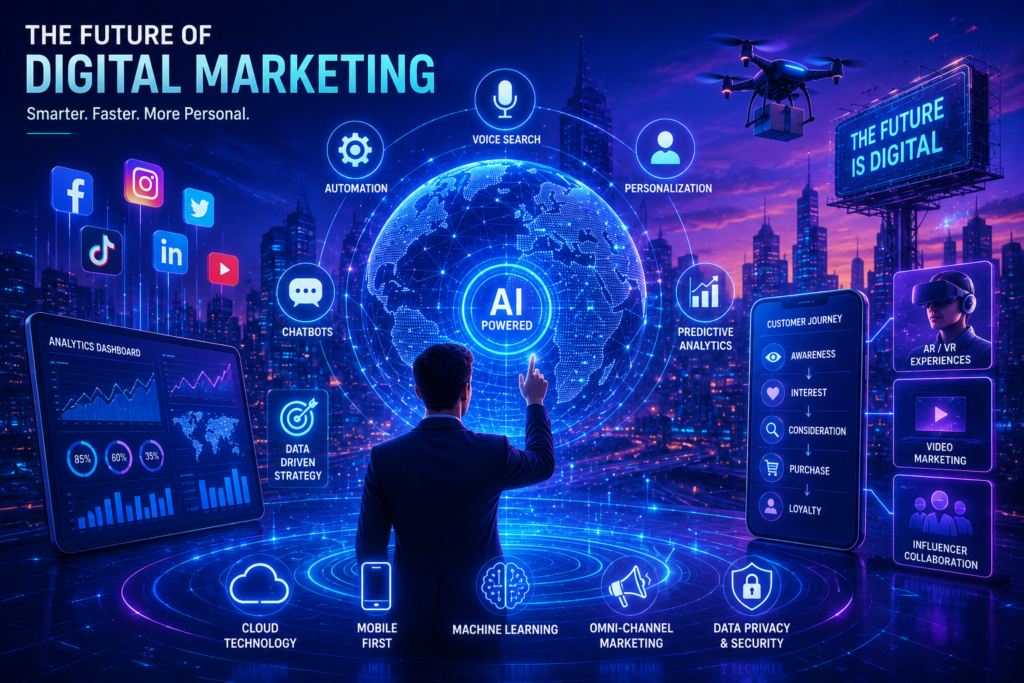
Future of Digital Marketing In this guide we will cover the top digital marketing trends 2026. If you want to know the latest digital marketing trends for 2026, you are in the right place. Digital marketing trends 2026 is changing faster than ever, and businesses need to keep up with the latest strategies to stay competitive. In 2026, technologies like artificial intelligence (AI), voice search, short-form videos, and personalized marketing are transforming how brands connect with customers. Understanding these changes can help businesses improve their online presence, attract more customers, and increase sales. In this article, we’ll explore the Top Digital Marketing Trends 2026, explain why they matter, and share practical tips to help you stay ahead in the digital world. AI-Powered Marketing Becomes Smarter Artificial Intelligence (AI) is one of the biggest digital marketing trends 2026. It helps businesses understand customer behavior, create better content, and improve marketing results with less time and effort. AI tools are making marketing faster, smarter, and more effective for businesses of all sizes. AI Tools for Better Marketing AI-powered tools can help marketers write blog posts, create social media captions, generate images, analyze data, and plan marketing campaigns. Digital marketing trends 2026 These tools save time and allow businesses to focus on strategy and customer relationships. Personalized Content Today’s customers expect content that matches their interests. AI analyzes customer data, such as browsing history and purchase behavior, to recommend products, send personalized emails, and display relevant advertisements. This improves the user experience and increases engagement. Marketing Automation AI makes it easy to automate repetitive marketing tasks. Businesses can schedule social media posts, send follow-up emails, respond to customer questions with chatbots, and track campaign performance automatically. This saves time while ensuring consistent communication with customers. Benefits for Businesses Using AI in digital marketing offers several advantages: Saves time by automating routine tasks. Improves customer experience through personalization. Helps create content more efficiently. Increases engagement and conversion rates. Provides valuable insights for better marketing decisions. Customer Support AI-powered chatbots and virtual assistants provide instant customer support 24/7. They can answer common questions, solve basic issues, recommend products, and guide customers through the buying process. This improves customer satisfaction, reduces response times, and allows human support teams to focus on more complex inquiries. As a result, businesses can offer faster, more efficient, and cost-effective customer service. Content Creation Content creation is becoming faster and smarter with the help of Artificial Intelligence (AI). In 2026, marketers use AI tools to generate blog posts, social media captions, email campaigns, product descriptions, and video scripts in just a few minutes. These tools help save time, improve productivity, and maintain a consistent brand voice across different platforms. However, AI works best when combined with human creativity. While AI can generate ideas and drafts, marketers should review and personalize the content to ensure it is accurate, engaging, and aligned with their audience’s needs. High-quality, original content remains essential for building trust, improving SEO rankings, and increasing customer engagement. Businesses that use AI wisely can create more valuable content while staying competitive in the digital marketing landscape. Voice Search Optimization Voice search optimization is one of the most important digital marketing trends in 2026. With the growing use of smartphones, smart speakers, and AI voice assistants like Google Assistant, Siri, and Alexa, more people are searching the internet using their voice instead of typing. Voice searches are usually longer and more conversational, which means businesses need to optimize their content for natural language and question-based keywords. To succeed in voice search, marketers should focus on creating clear, informative, and easy-to-read content. Using long-tail keywords, answering common customer questions, and optimizing for local SEO can improve the chances of appearing in voice search results. Websites that load quickly, are mobile-friendly, and provide accurate information are more likely to rank well. digital marketing trends 2026 By adopting voice search optimization, businesses can reach a wider audience, improve user experience, and stay ahead in the competitive digital marketing landscape Short-Form Video Content Short-form video content continues to dominate digital marketing in 2026. Platforms like TikTok, Instagram Reels, and YouTube Shorts have changed the way people consume content. These videos are usually 15 to 60 seconds long, making them easy to watch, share, and engage with. Businesses use short videos to showcase products, share tips, tell stories, and connect with their audience in a creative way. One of the biggest advantages of short-form videos is their high engagement rate. Eye-catching visuals, trending music, and quick storytelling encourage users to like, comment, and share the content. This helps brands reach a larger audience without spending a huge advertising budget. Consistently posting valuable and entertaining videos also improves brand awareness, builds customer trust, and increases website traffic and sales. In 2026, short-form video marketing is no longer optional—it is an essential strategy for businesses that want to grow online. Digital Marketing trends 2026 (Personalized Marketing) Personalized marketing is one of the most effective digital marketing trends in 2026. Instead of showing the same content to everyone, businesses use customer data to deliver personalized experiences based on individual interests, browsing history, purchase behavior, and preferences. This helps brands build stronger relationships with their audience and improve customer satisfaction. Customer Data Customer data is the foundation of personalized marketing. Businesses collect information such as age, location, interests, website activity, and previous purchases to better understand their customers. By analyzing this data, marketers can create targeted campaigns that are more relevant and effective. Using customer data responsibly and respecting privacy regulations also helps build trust and long-term customer loyalty. Personalized Emails Personalized email marketing allows businesses to send relevant messages to each customer. Instead of generic emails, companies can include the customer’s name, recommend products based on previous purchases, or send special offers for birthdays and holidays. Personalized emails often achieve higher open rates, click-through rates, and conversions because they provide content that matches the recipient’s interests. Product Recommendations Product recommendations help customers discover items they are most likely